Shantanu Parmar
Post-Bach researcher in Astrophysics, Machine Learning, and Computer Vision
About
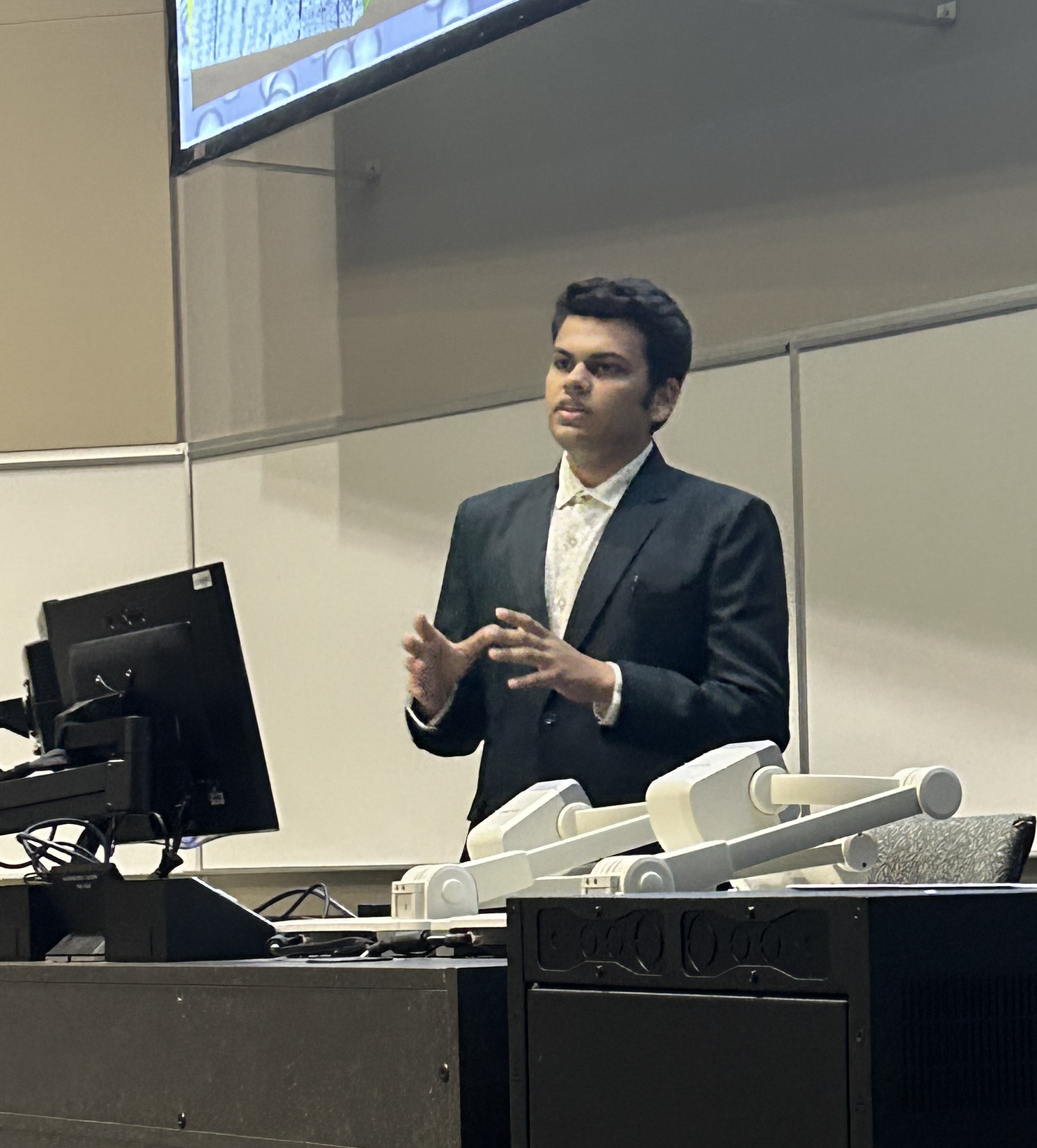
My name is Shantanu Parmar, and I am Visiting Student at the Department of Astrophysics at Cornell University. I am an American Physical Society Matching Membership Fellow, a student member of the American Astrophysical Society and a member of the Inspired 24 Space Initiative. My research interests lie at the intersection of Astrophysics, Machine Learning, and Imaging. In my free time, I enjoy astrophotography, hiking, and building electronics projects.
Education
-
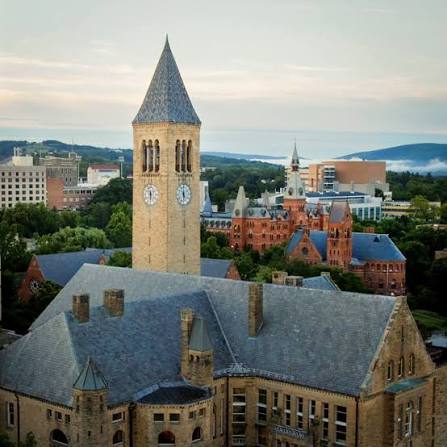 Cornell University (Click for course details)
-
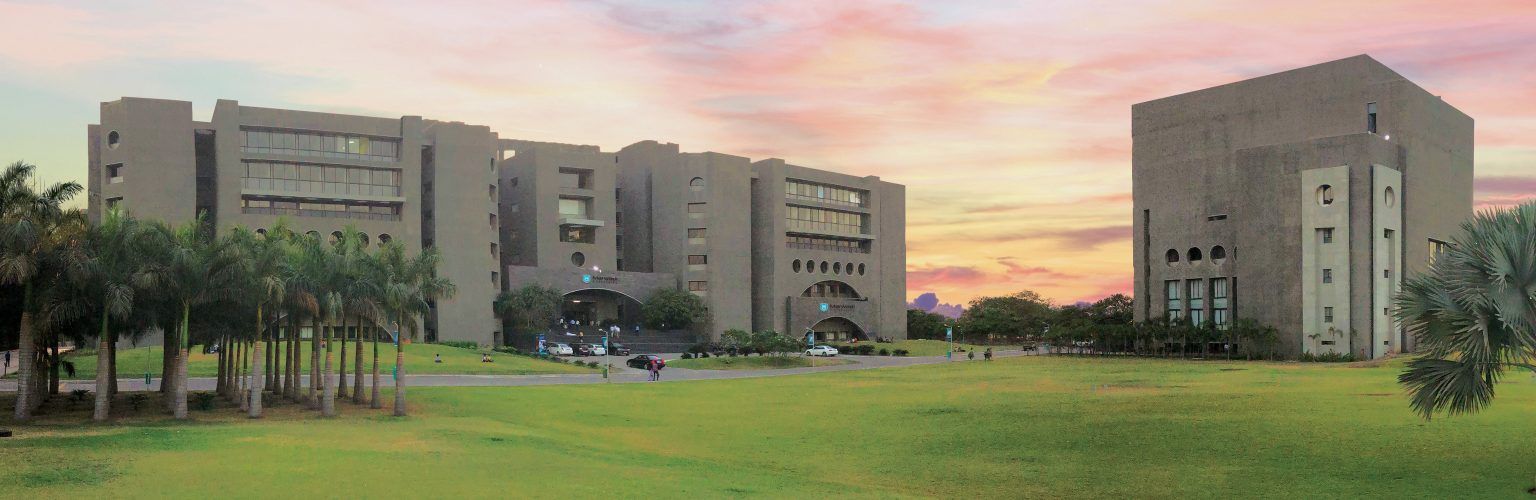 Marwadi University
-
 Saint Paul’s School, Rajkot
- B.H. Rathod High School, Rajkot, Gujarat
Research
Full list of publications on arXiv, Google Scholar, ORCID
Astrophysics
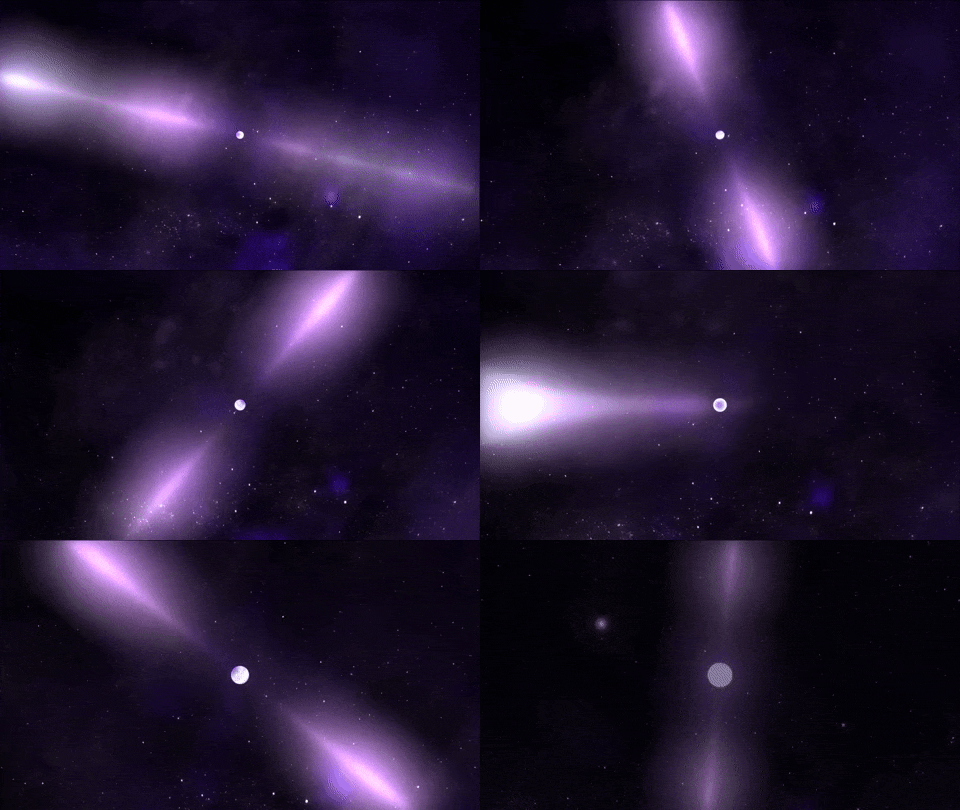
Pulsar Timing Array - Neural Net based TOA estimation
May 2026 – Present | Supervisor: Prof. Jim Cordes, Cornell University
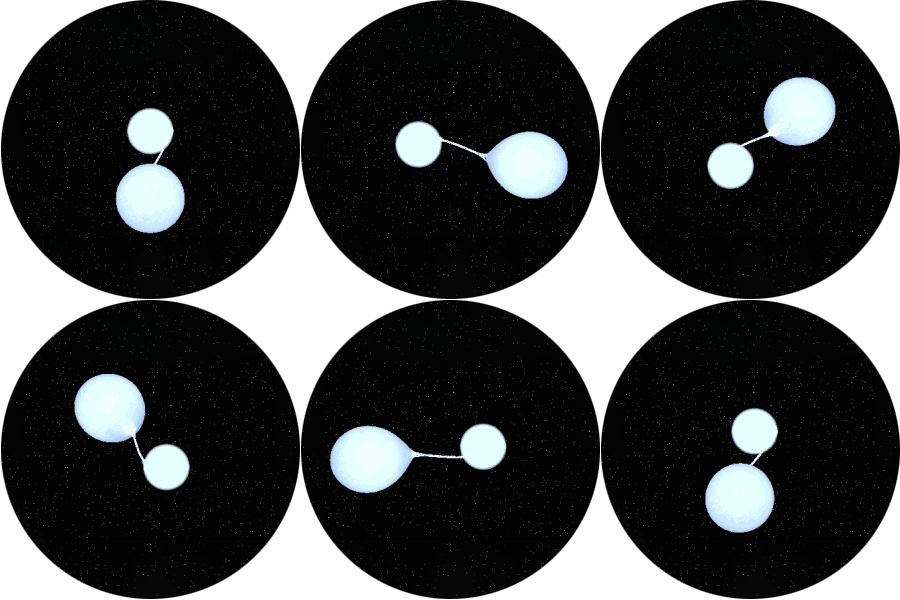
PDot Measurement for detached White Dwarf binaries as future LISA sources
March 2026 – Present | Supervisor: Dr. Warren Brown, Smithsonian Institute and CfA at Harvard University
Galactic double white dwarf binaries are a prolific LISA source class. Unfortunately, most detached white dwarf binaries will appear as mono-frequency sources to LISA. Here, we present optical time-series spectroscopy for some known LISA white dwarf binaries. We fit the phase of the radial velocity curve obtained at different epochs, and demonstrate that orbital frequency change measurements are possible for non-eclipsing white dwarf binaries. Our optical measurements will enable a physical understanding of these future multi-messenger laboratories.
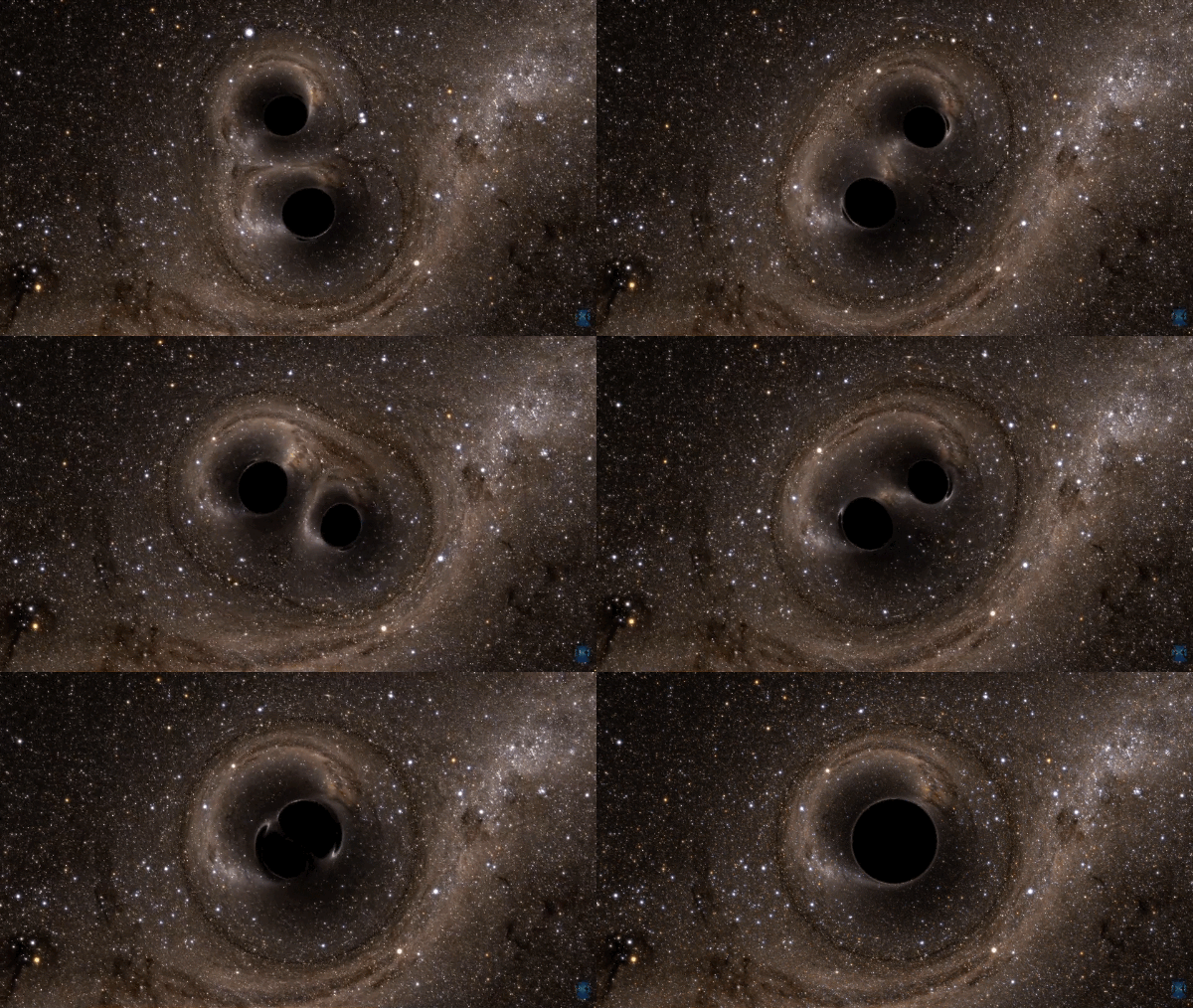
OmniFormer: Context-aware transformer localizing transient noise sources in LIGO
Nov 2024 – March 2026 | Supervisor: Prof. Marco Cavaglia, Missouri University of Science and Technology
Gravitational Wave detection within advanced LIGO interferometers is highly affected by transient noise sources that are often non-astronomical. To enable the flagging of sources of such events within the instrumentation of an interferometer, a transformer model was designed. Running in inference mode, it predicts in real time the nature/source of transient noise based on its training data(over large portions of previous observational runs).
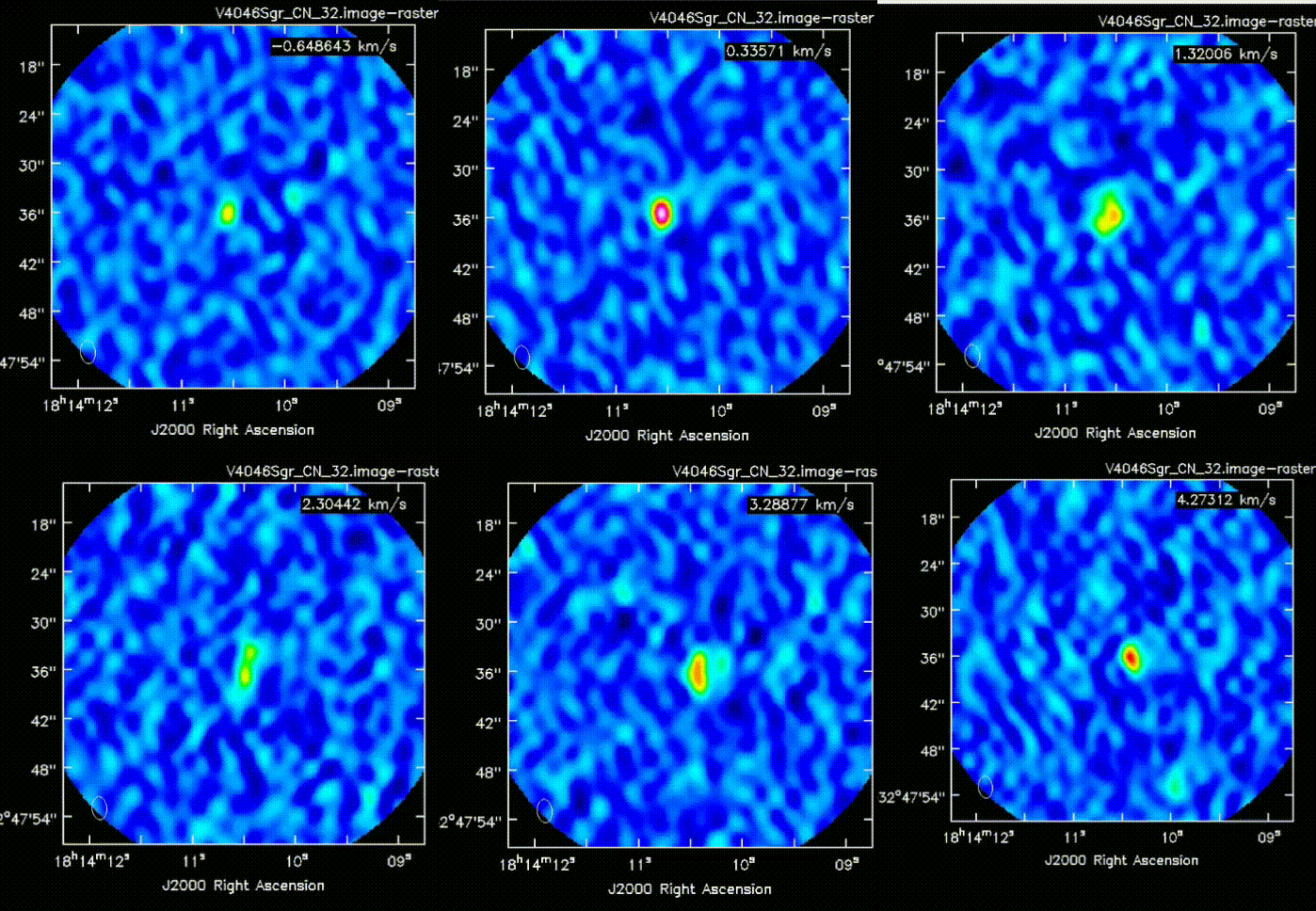
A Comparative Evaluation of Transitional and Full Protoplanetary Disks
March – November 2025 | Supervisor: Prof. Charles J Law, University of Minnesota
Protoplanetary disks are gaseous circumstellar structures composed of stellar byproducts and serve as the birthplaces of exoplanets. Understanding the astrochemistry of these disks provides critical insights into the processes governing planet formation and the potential emergence of habitable environments. Transitional disks, characterized by gaps or discontinuities within their structure, may exhibit distinct chemical and physical signatures indicative of alternative pathways of planet formation. In this study, we analyze and compare the chemical composition of transitional disks with that of classical protoplanetary disks. Observations of five transitional disks were conducted across three molecular tracers: HCO⁺(4–3), HCO⁺(3–2), and CN(3–2). These observations, previously unpublished, contribute new data to the body of knowledge on astrochemistry of protoplanetary disks.
Electric Propulsion

Study of Machine Learning Techniques for Performance Prediction in Low-Power Hall Effect Thruster Operating on Monoatomic and Molecular Propellants
Nov 2025 – July 2026 | Supervisor: Dr. Dan Lev, HPEPL Georgia Institute of Technology
The transition to low-power Hall effect thrusters (HETs) and the increasing demand for alternative molecular propellants require predictive modeling tech- niques that transcend the limitations of traditional, monatomic empirical scaling laws. This study develops a robust, propellant-agnostic machine learning (ML) framework to predict critical performance metrics, namely thrust, beam current, and discharge current, in low-power regimes across varied propellants (Xe, Kr, Ar, CO2, N2).
Plasma Plume Simulation
Jan – May 2026 | Supervisor: Prof. Elaine Petro, Cornell University
Numerical modeling of plasma plumes for electrospray thrusters. Plume characterization via PIC, n-body and ML-based simulations.
Video: Petro et al., IEPC 2019 (simulation of electrospray thruster plume)
Imaging
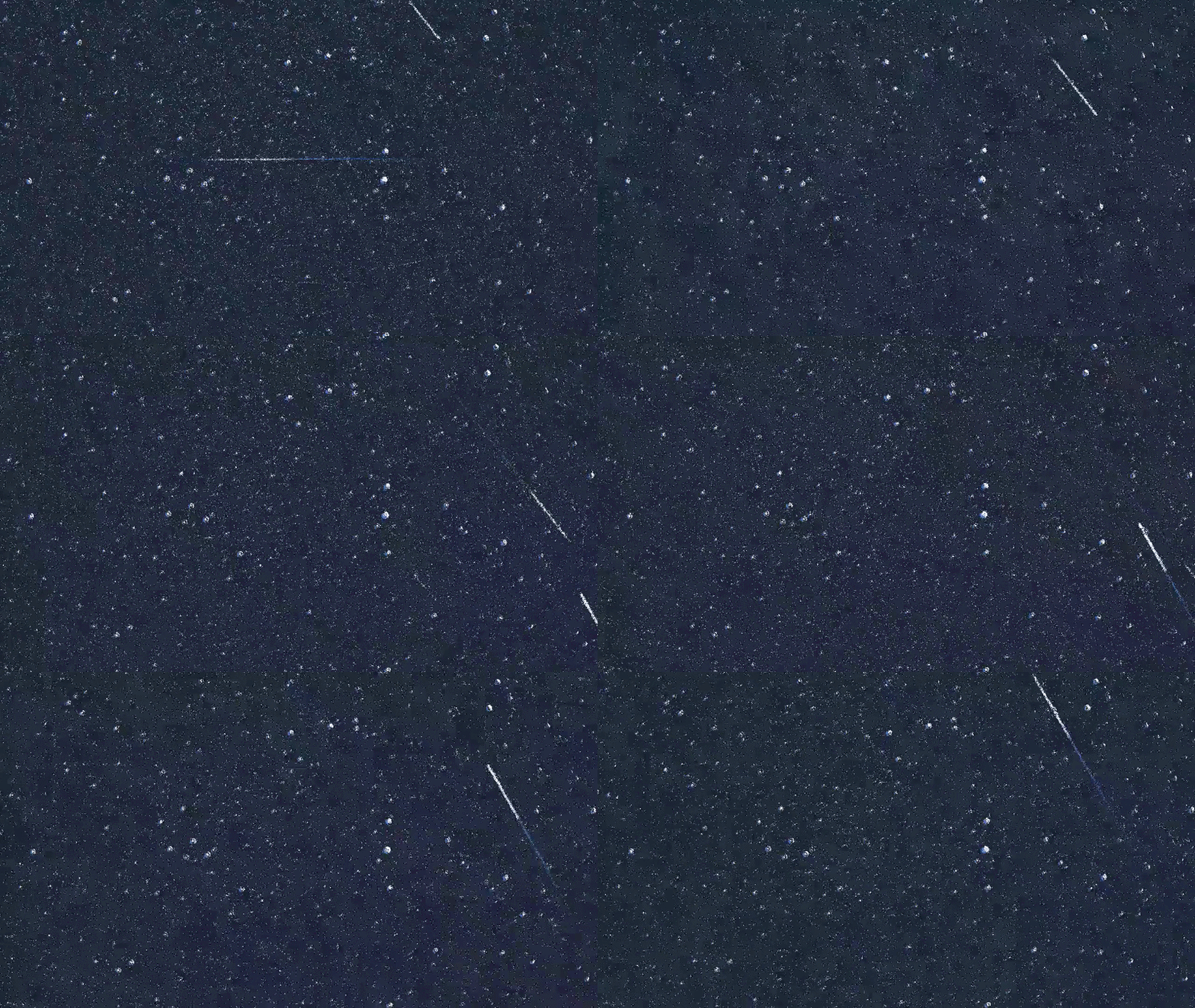
Event Based Vision for Star tracking
May 2026 – Present | Supervisor: Prof. Kristina Monakhova, Cornell University
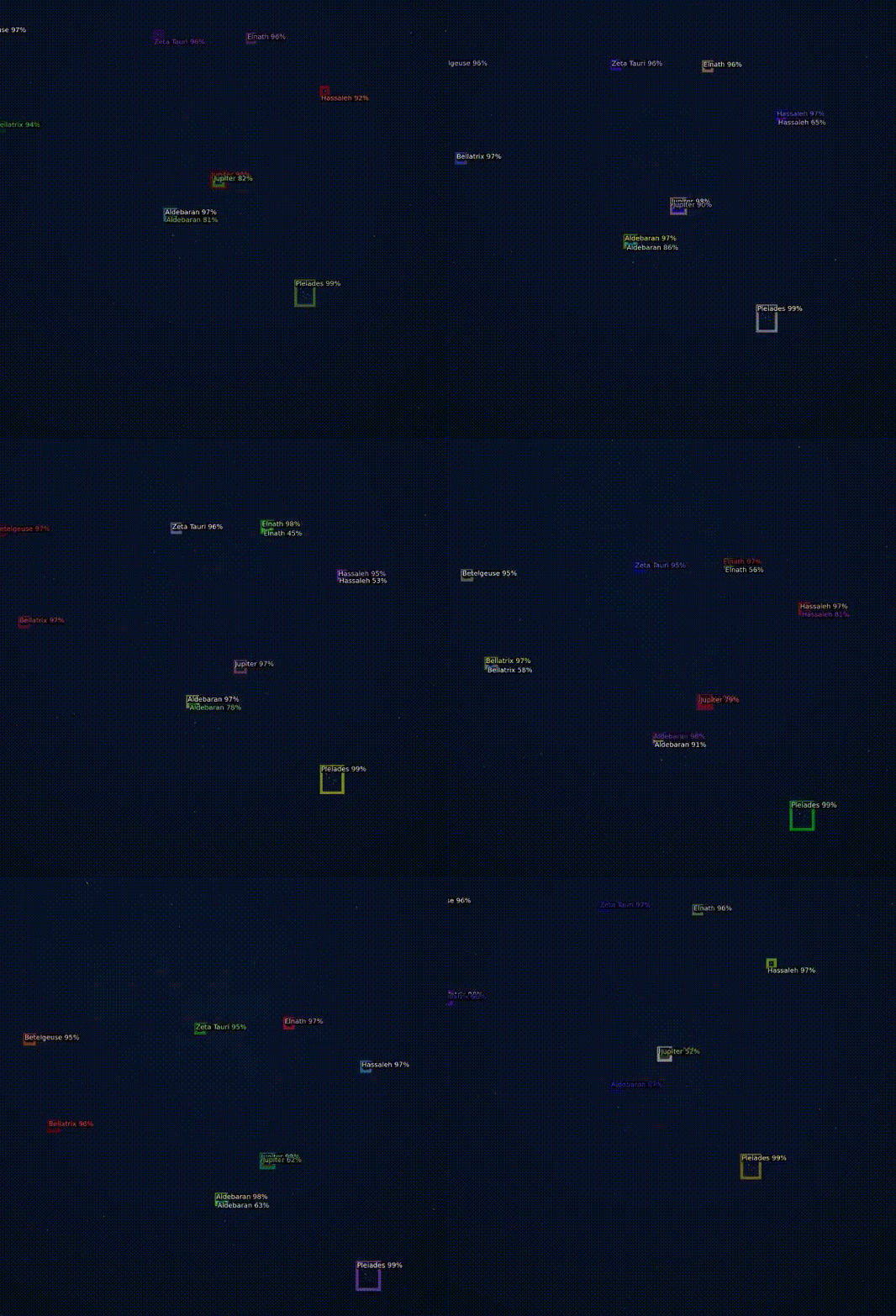
Benchmarking Deep Learning Object Detection Models on Feature-deficient Dataset
September 2024 – May 2025
Statistical techniques and machine learning algorithms have been applied to object detection in astrophysical datasets, primarily using high-resolution data from large-aperture telescopes for galactic or cosmological studies. While star trackers have supported missions such as JWST and lunar landers, no prior work has utilized direct low-SNR data for celestial body detection and tracking. This study evaluates common object detection models on a proprietary low SNR astrophotography dataset comprising over 5,000 labeled low-SNR night-sky images collected over five months, covering eight major celestial objects and five constellations, the first of its kind in smartphone-based astrophotography.
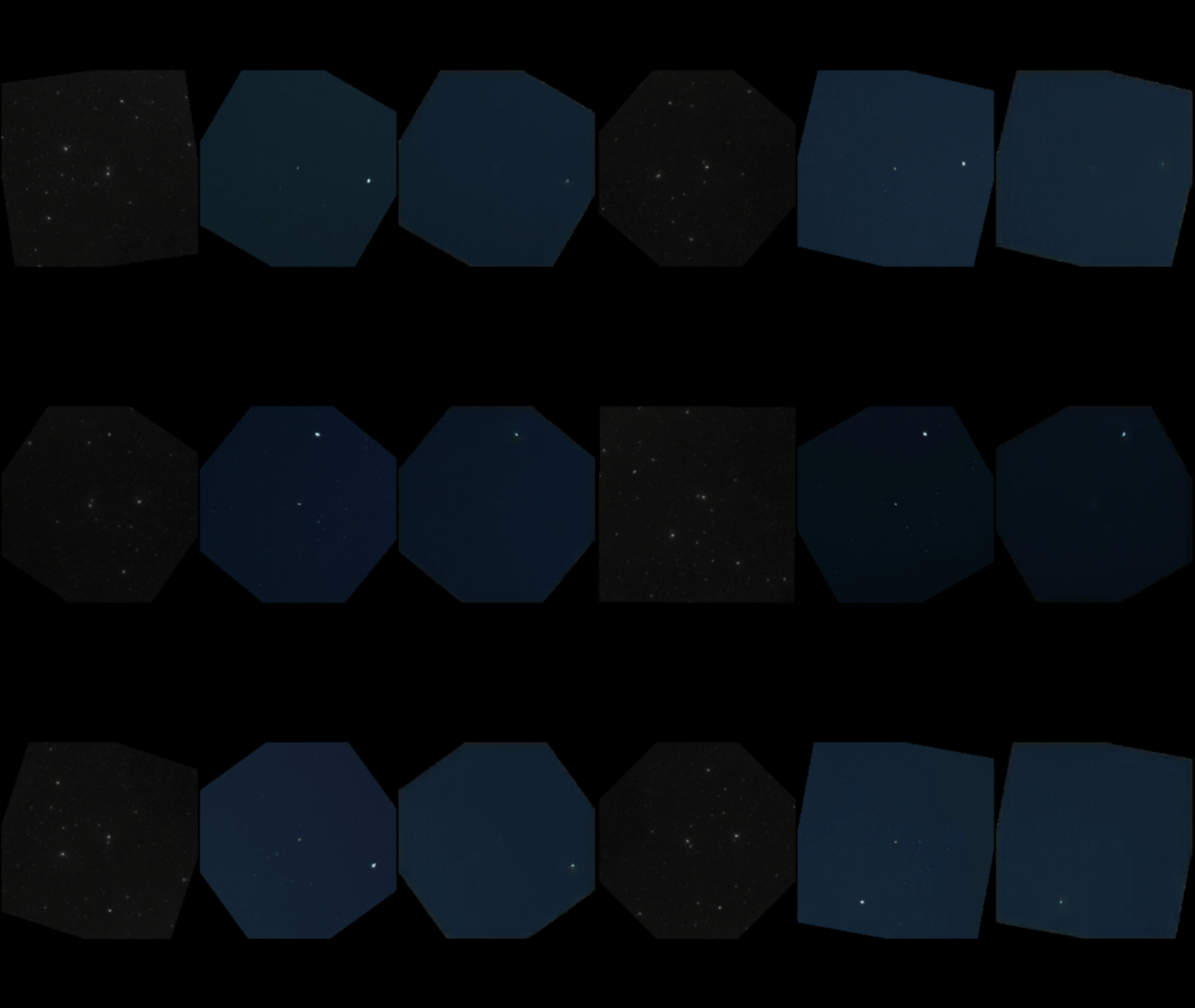
StrCGAN: A Generative Framework for Stellar Image Restoration
Jan – Sep 2025
Low signal-to-noise ratio (SNR) astronomical data is often heavily affected by environmental and electronic noise, obscuring the intrinsic characteristics of target celestial sources. Generative models have demonstrated remarkable capabilities in replicating complex data features and so in this study, a modified CycleGAN architecture optimized for astronomical imaging is developed, incorporating three-dimensional convolutional layers to effectively capture volumetric and depth information. The model is trained over near-infrared (NIR) to optical wavelength datasets from all-sky surveys as ground-truth priors to improve reconstruction fidelity and noise suppression in baseline dataset (low SNR target images).
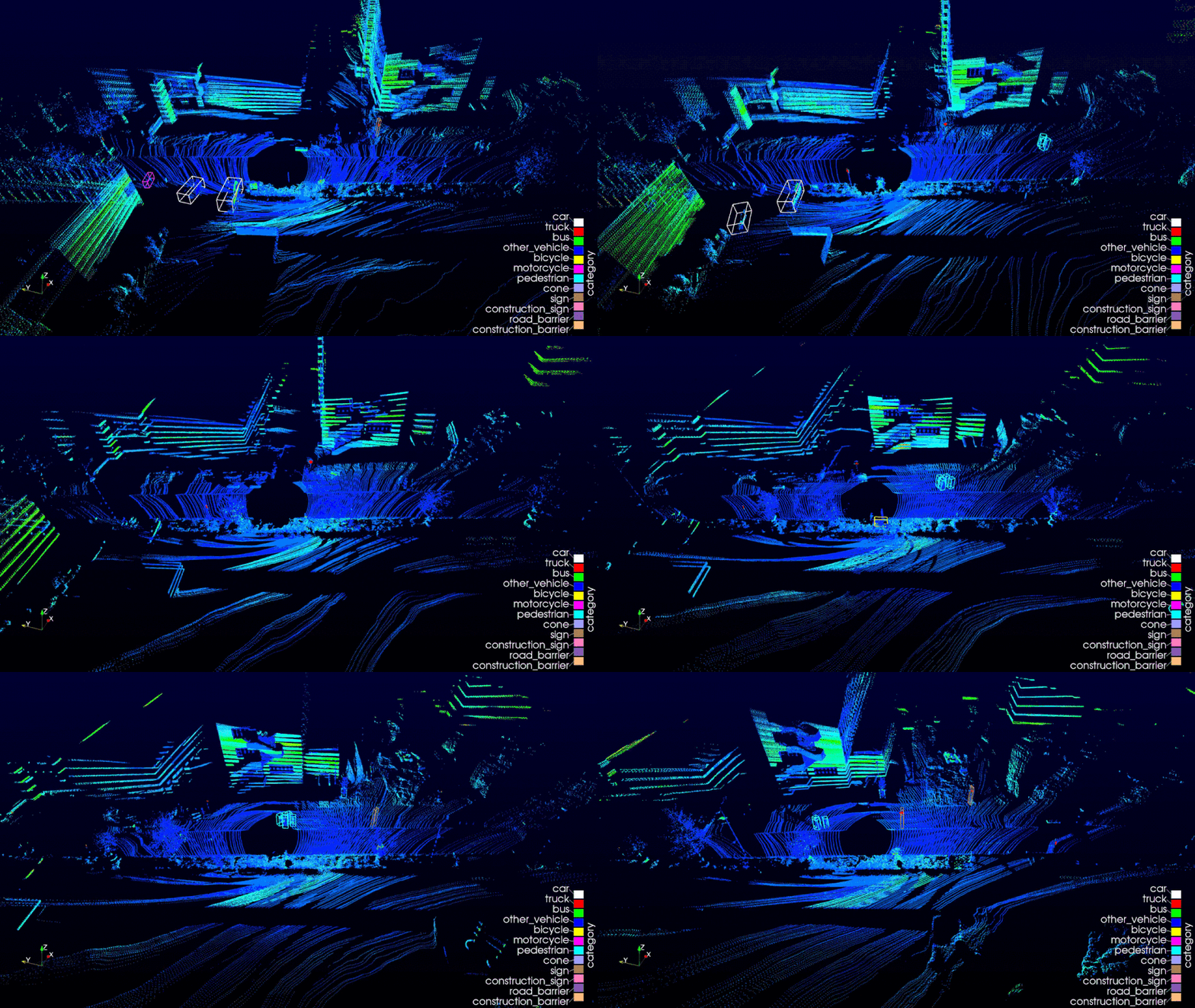
Utilizing LiDAR to Quantify the Complexities of Autonomous Driving Environments
May – Aug 2024 | Supervisor: Prof. Karim El-Basyouny • Edmonton, Canada
LiDAR sensing is increasingly being exploited to boost field and range of vision in autonomous applications. In this research, a transformer was built to flag elements in a driving elements such as road signs, lane markers, pavements etc for increasing safety in autonomous driving systems. It was trained on proprietary pointcloud data stream fused with high fidelity IMU sensors across various driving environments.
Projects
Outreach
Public Talks
- Invited Talk at the San Jose Astronomical Association on combined efforts for GW hunt - LIGO, LISA & Nanograv. Watch
- Group project presentation on role of functional forms in Exoplantary Demographics at the 2025 Sagan Summer Workshop Watch
- 3 Minute Thesis on my research work at University of Alberta, Summer 2024 Watch
- Poster Presentation: Utilizing Lidar Sensing to quantify the complexities of Autonomous Driving Environments Watch
- Research (Review) Presentation: Finding the origin of noise transients in LIGO data with machine learning Watch
- CMOS in Space: A study of need, development and future of CMOS chips in Astrophysics and Aerospace applications Watch
- Research (Review) Presentation: Design of an Optical Photon Counting Array Receiver System for Deep-Space Communications Watch
- GWeasy features run through Watch
- Web Interface tool for visualizing Hierarchical Bayesian Inference Models Watch
- CropX internship final project demo for smart Agriculture tool development Watch
- Universal Projector Remote Control Demo Watch
- Car Battery Voltmeter Circuit Analysis Watch
- Analog Electronics: An overview Watch
- JAVAX: A programming languages teaching aid Watch
- The Bland Potato Debate Watch
Presentations
Demos
Fun
Associations

Matching Membership Fellow
American Physical Society
Community Member
The Laser Interferometer Space Antenna
Member
Inspired24: Space 4 all
Member
Dark Matter Sub Working Group
Shan in the Wild
Contact
Have questions about my work or interested in collaboration? Feel free to reach out.
-
Address
Pale Blue Dot, RA: 10h 45m 23.3s, Dec: -59° 50′ 33″
Local Bubble, Milky Way, Virgo,
Observable Universe -
Email
sp2733@cornell.edu -
Social